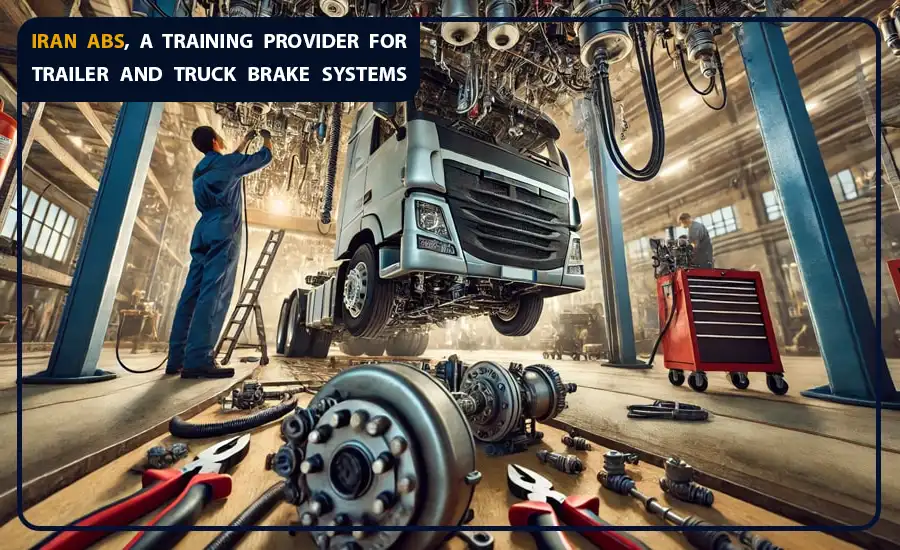
Hydraulic and pneumatic systems are fundamental components in enhancing the efficiency and safety of heavy vehicles. These technologies, utilizing fluid and air forces, have successfully addressed various needs across different sectors of the automotive industry. From braking and steering to suspension and load handling systems, their extensive applications have secured a crucial role in heavy vehicles. Iran ABS, through specialized services and professional training in this field, plays a significant role in optimizing the performance and safety of these vehicles.
Hydraulic Systems in Heavy Vehicles
Hydraulic systems utilize Pascal’s law to transfer energy through fluids (typically hydraulic oil). These systems provide high power, exceptional precision, and excellent controllability in heavy-duty operations.
KeyComponents of Hydraulic Systems
Hydraulic Pump – Provides pressure to move the fluid.
Hydraulic Cylinder – Converts fluid energy into mechanical motion.
Oil Reservoir – Stores hydraulic oil and helps cool the system.
Control Valves – Regulate pressure and fluid flow.
Hoses and Pipes – Transport fluid between components.
Filters – Remove contaminants and maintain system health.
Common Applications of Hydraulic Systems
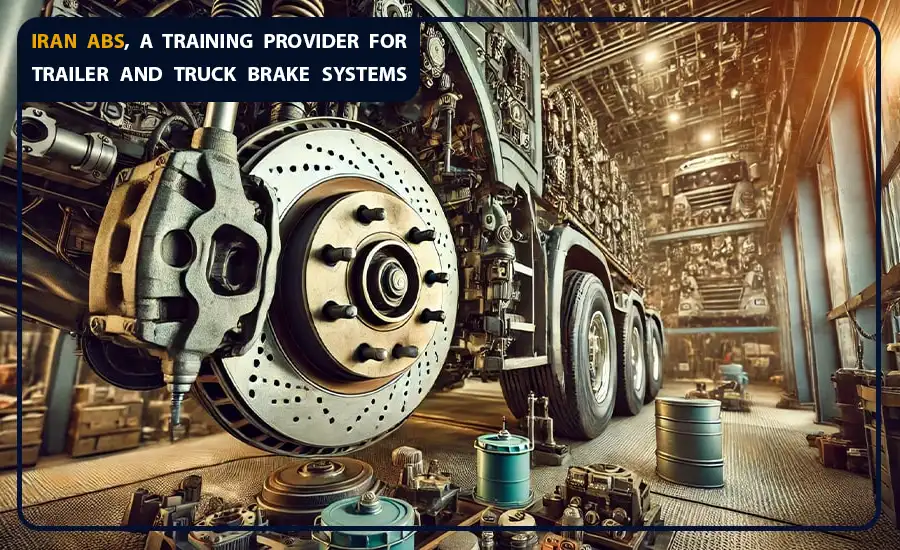
Hydraulic Brakes – Enhance safety by providing strong and reliable stopping force.
Hydraulic Steering – Reduces the effort required to turn the steering wheel.
Hydraulic Jacks – Lift and move heavy loads in trailers.
Hydraulic Suspension System – Minimizes vibrations and road impacts.
Hydraulic Forklifts – Transport heavy loads in warehouses or vehicles.
Advantages and Disadvantages of Hydraulic Systems
Advantages
Disadvantages
Risk of leakage and environmental contamination
احتمال نشتی و آلودگی محیط
High precision and controllability
Sensitivity to oil contamination
Durability and long lifespan
Stable performance in harsh conditions
عملکرد پایدار در شرایط سخت
Heavy and bulky equipment
Pneumatic Systems in Heavy Vehicles
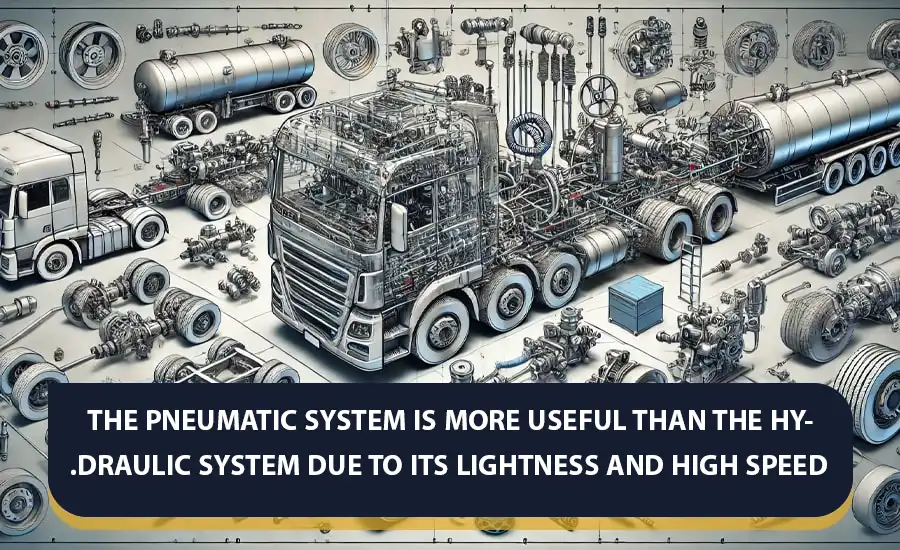
Pneumatic systems utilize compressed air to transfer energy. Due to their lightweight design, high speed, and lower cost compared to hydraulic systems, they are preferred in certain applications..
Key Components of Pneumatic Systems
Air Compressor – Produces and supplies compressed air.
Air Reservoir – Stores compressed air for use when needed.
Control Valves – Regulate air pressure and flow.
Pneumatic Cylinder – Converts compressed air energy into mechanical motion.
Pipes and Fittings – Transport air to various system components.
Features and Advantages
Lightweight and Cost-Effective – Suitable for vehicles with budget constraints.
High Safety – Air is a non-flammable medium, enhancing safety.
Fast Operation – Ensures quick response in critical applications.
Environmentally Friendly – Does not use polluting substances.
Common Applications of Pneumatic Systems
Air Brakes – Generate strong stopping force in trucks and trailers.
Air Suspension Systems – Adjust vehicle height and reduce chassis strain.
Automatic Doors – Enable automatic opening and closing in buses.
Repair Tools – Used in pneumatic-powered tools such as impact wrenches.
Advantages and Disadvantages of Pneumatic Systems
Advantages
Disadvantages
Lightweight and cost-effective
Limited power
Environmentally friendly
Requires a continuous compressor
High speed and responsiveness
Less control compared to hydraulic systems
High safety
Produces high noise levels
Comparison of Hydraulic and Pneumatic Systems
1. Performance
Hydraulic systems are more suitable for moving heavy loads due to their high power and precision.
Pneumatic systems are prioritized for fast and lighter operations.
2. Costs
Hydraulic systems have higher initial costs but are more cost-effective in the long run.
Pneumatic systems are cheaper initially, but the continuous need for a compressor increases operational costs.
3. Maintenance
Hydraulic systems require regular and precise maintenance.
Pneumatic systems have simpler maintenance, but they rely on a functioning compressor.
Competitive Advantages of Hydraulic and Pneumatic Systems
Both technologies have unique characteristics that make them essential in various industries, especially in heavy vehicles. Below is a breakdown of their competitive advantages::
Hydraulic Systems
High Power – Hydraulic systems can generate immense force, making them essential for moving heavy loads.
Precise Control – Due to the fluid-based power transfer mechanism, they allow for accurate motion control.
Durability and Strength – Hydraulic components are designed to withstand harsh conditions and continuous use for an extended lifespan.
Pneumatic Systems
Fast Response – Using compressed air, pneumatic systems provide quick reaction times, making them ideal for applications requiring immediate action.
Lightweight and Safe – Pneumatic components are lighter than hydraulic ones, and since they use air, they offer higher safety levels in both environmental and operational aspects.
Lower Costs – The initial and maintenance costs of pneumatic systems are lower than hydraulic systems, making them a more economical choice for certain applications.
Suspension and Braking Systems in Heavy Vehicles
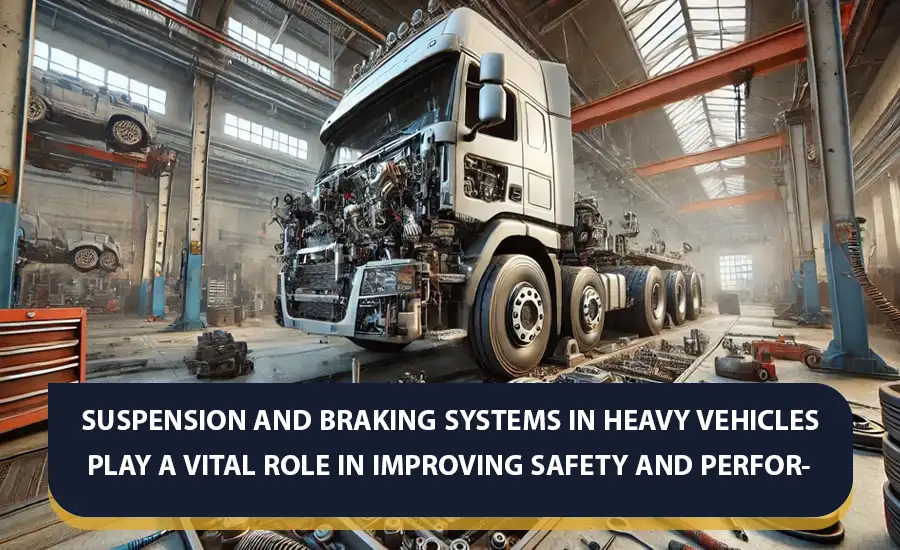
Suspension and braking systems play a crucial role in enhancing the safety and performance of heavy vehicles. This article explores the features, advantages, and differences between hydraulic and pneumatic systems in this field..
Hydraulic vs. Pneumatic Suspension Systems
Hydraulic Suspension:
Reduces road impacts and improves vehicle stability.
Increases the durability of mechanical components by minimizing vibrations.
Provides better conditions for transporting heavy and delicate cargo.
Pneumatic Suspension:
Adjusts vehicle height to accommodate different loads.
Reduces stress on vehicle axles, preventing premature wear.
Provides a smoother ride, especially for long-distance journeys.
Pneumatic (Air) Brake System
One of the most critical safety systems in heavy vehicles is air brakes, which are preferred due to the following benefits:
High safety: Even in case of a malfunction, the system can continue to operate using air reservoirs.
Reliable stopping power: Capable of generating strong force to stop heavy loads efficiently.
Easy maintenance and repairs: Components are simple to replace and maintain.
Hydraulic Brake System
Precise control: Allows the driver to generate strong braking force with minimal pressure.
Stable performance: Maintains effectiveness at high speeds or steep inclines.
Final Thoughts
In this Iran ABS blog article, we examined the role of hydraulic and pneumatic systems in improving the safety and efficiency of heavy vehicles. Both systems offer unique advantages, making them ideal choices based on application type, budget, and operational needs.